Duckout
Hide it. It's still there.
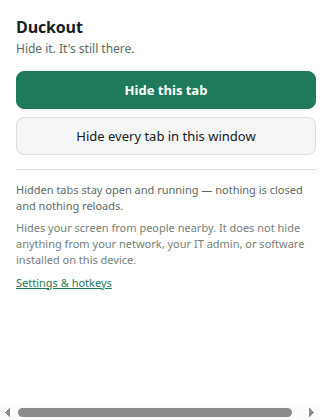
Someone walks up. One key, and the tab you were on is off your screen. Duckout does not close it — the tab stays open and running in a background window, so your half-typed form, your logged-in session, and your playing video are all still there. Press the same key and it comes back exactly where it was, in the same position in your tab strip. Nothing reloads, nothing is lost.
That's the whole difference from most panic buttons: they close your tabs and reopen the URLs later, which is why their reviews are full of people who lost a form they were filling in, or lost the tabs altogether. Duckout never closes anything.
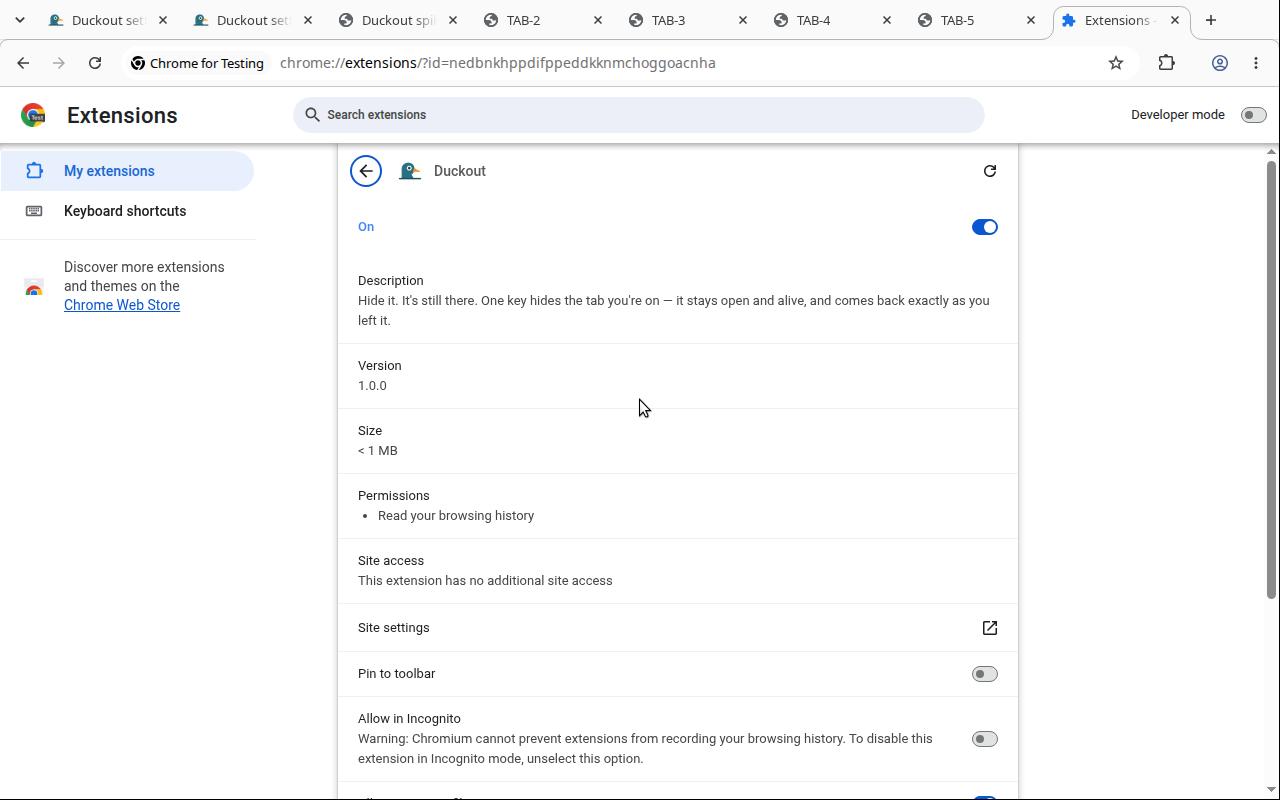
Chrome describes the tabs permission as "read your browsing history" — that's Chrome's generic wording for tab access, and tab access is the entire feature. Duckout requests no host permissions and injects no content scripts, so it structurally cannot read what's on your pages. No analytics, no telemetry, no accounts, no network calls — nothing leaves your machine.
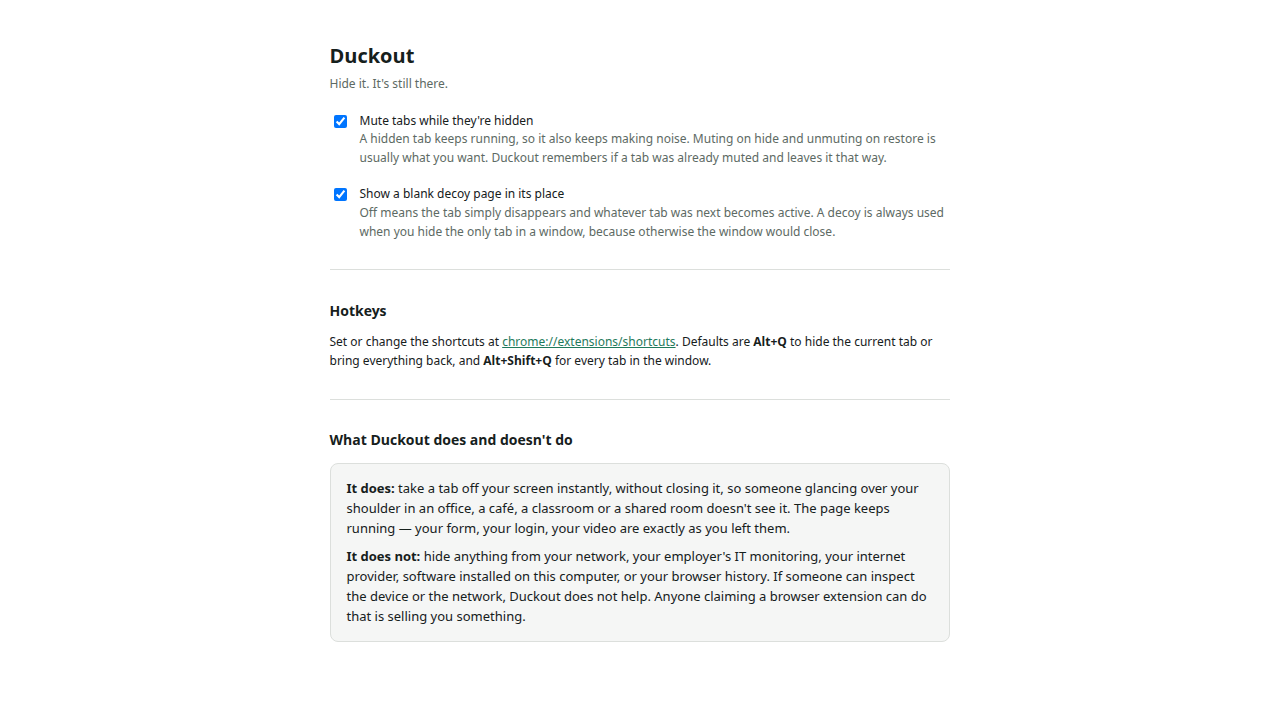
It's built for shoulder-surfing: someone glancing at your screen in an office, a café, a classroom, a shared room. It does not hide anything from your network, your employer's IT monitoring, your internet provider, or software installed on your computer — if someone can inspect the device or the network, Duckout doesn't help.
What you get
- One key hides the current tab; press it again to bring everything back
- One key hides every tab in the window at once
- Optional blank decoy page where the tab used to be
- Hidden tabs are muted while away, unmuted on restore
- Pinned tabs and tab order are preserved exactly
- Free, no account, no sign-in